Why Experience Still Matters
Marketing has become extraordinarily good at putting products in front of people. We can target the right audience, measure impressions, optimize creative, and follow someone from awareness to purchase with outstanding precision.
What digital marketing has a harder time doing is making someone feel something about the product.
That is where experiential marketing earns its place.
A good experience creates a connection between a product and a moment: the road you rode, the trail you ran, the meal after a long day, the conversation with the person who designed the thing you were using. The product becomes part of the memory rather than simply another message competing for attention.
There is science behind that idea. Decades of research into learning and memory have demonstrated that emotional arousal can strengthen the consolidation of long-term memories. In other words, we tend to remember experiences that make us feel something better than experiences that don't.
Marketing research sees much the same effect. Freeman's 2025 Trust Report, conducted with The Harris Poll among more than 1,800 working professionals, found that 95% of attendees said they trusted a brand more after an in-person event, while 89% said the experience made them feel closer to the brand. Nearly half said that their improved perception of a brand lasted for months or longer.
But the value of experiential marketing goes beyond positive feelings.
A product is more convincing when it can prove itself.
For many products—particularly in cycling, outdoor, automotive, travel and other experience-driven categories—the environment is part of the product story.
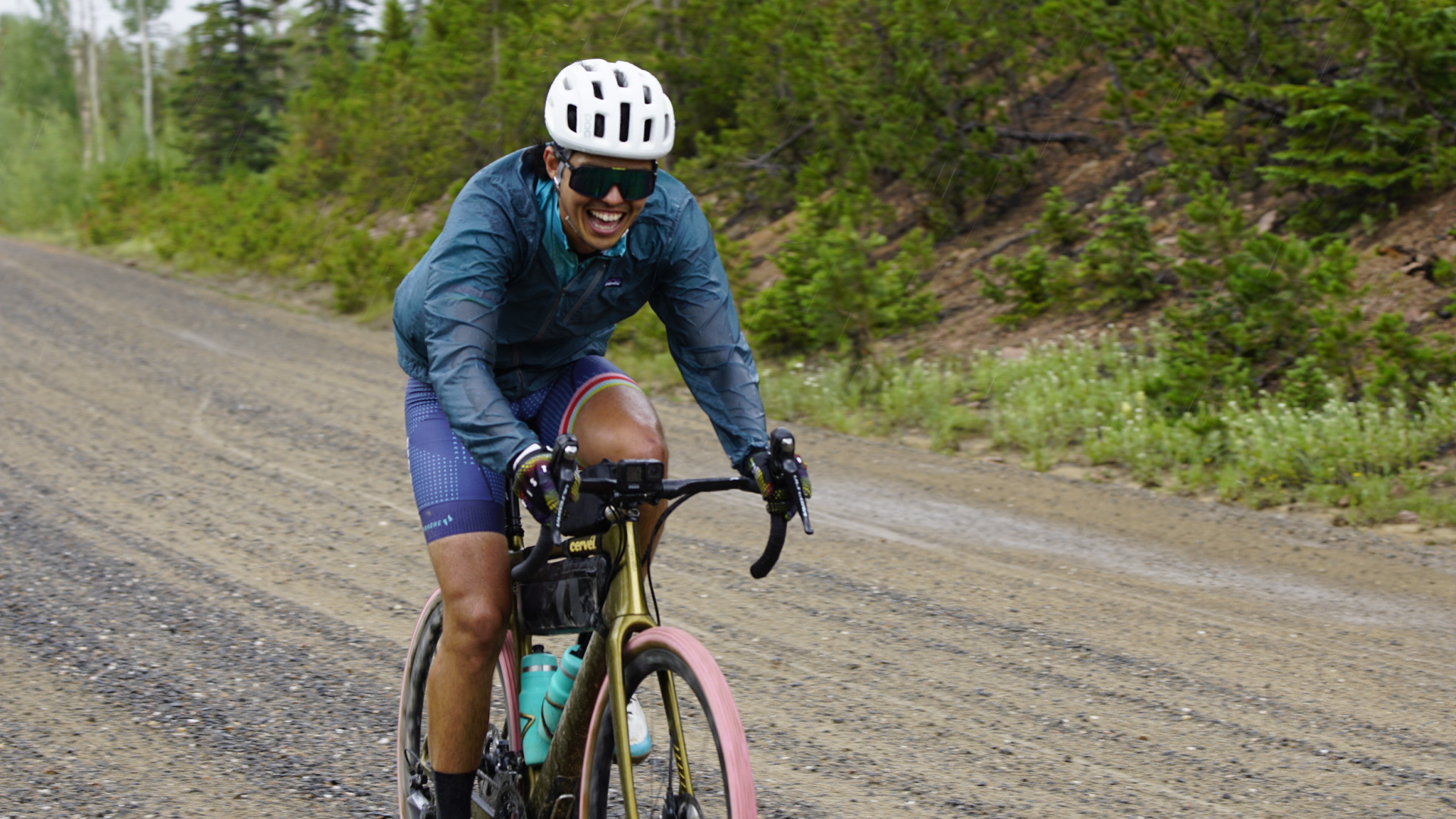
You can describe the handling of a bicycle. You can list the waterproof rating of a jacket. You can explain how a hydration system works. But none of those communications are quite the same as riding the bike down a mountain, wearing the jacket through an afternoon storm, or reaching for that bottle three hours into a ride.
Recent Freeman research found that 96% of attendees who received hands-on product exposure said it made it easier to advocate for the purchase. In comparison, 95% said it helped them determine whether the product was actually a good fit.
EventTrack's 2026 research points in the same direction. Among trade-show attendees who became more inclined to purchase, the leading reason was gaining a greater understanding of the product or service (62%). Meeting someone who might offer deeper information followed at 57%, and actually trying the product was cited by 56%.
That distinction is especially important when the audience includes journalists and creators.
A media ride, field test, or carefully designed product experience gives a journalist something a press release never can: firsthand evidence. Instead of repeating a brand's claims, they can form their own opinion about how the product behaves in the environment for which it was designed. The resulting story has a different level of credibility because the experience—not the marketing copy—is providing the material.
And the experience rarely ends with the people who attended it. EventTrack found that 87% of trade-show attendees told people who weren't there about their experience. For journalists, creators and influential customers, that amplification is effectively the reason they were invited in the first place.
This doesn't mean every brand needs a giant activation, elaborate booth or expensive launch.
Often the most effective experiential marketing is much simpler: put the right product in the right environment with the right people, then give them enough space to experience it for themselves.
Because ultimately, the strongest product story may not be the one a brand tells.
It may be the one someone remembers.