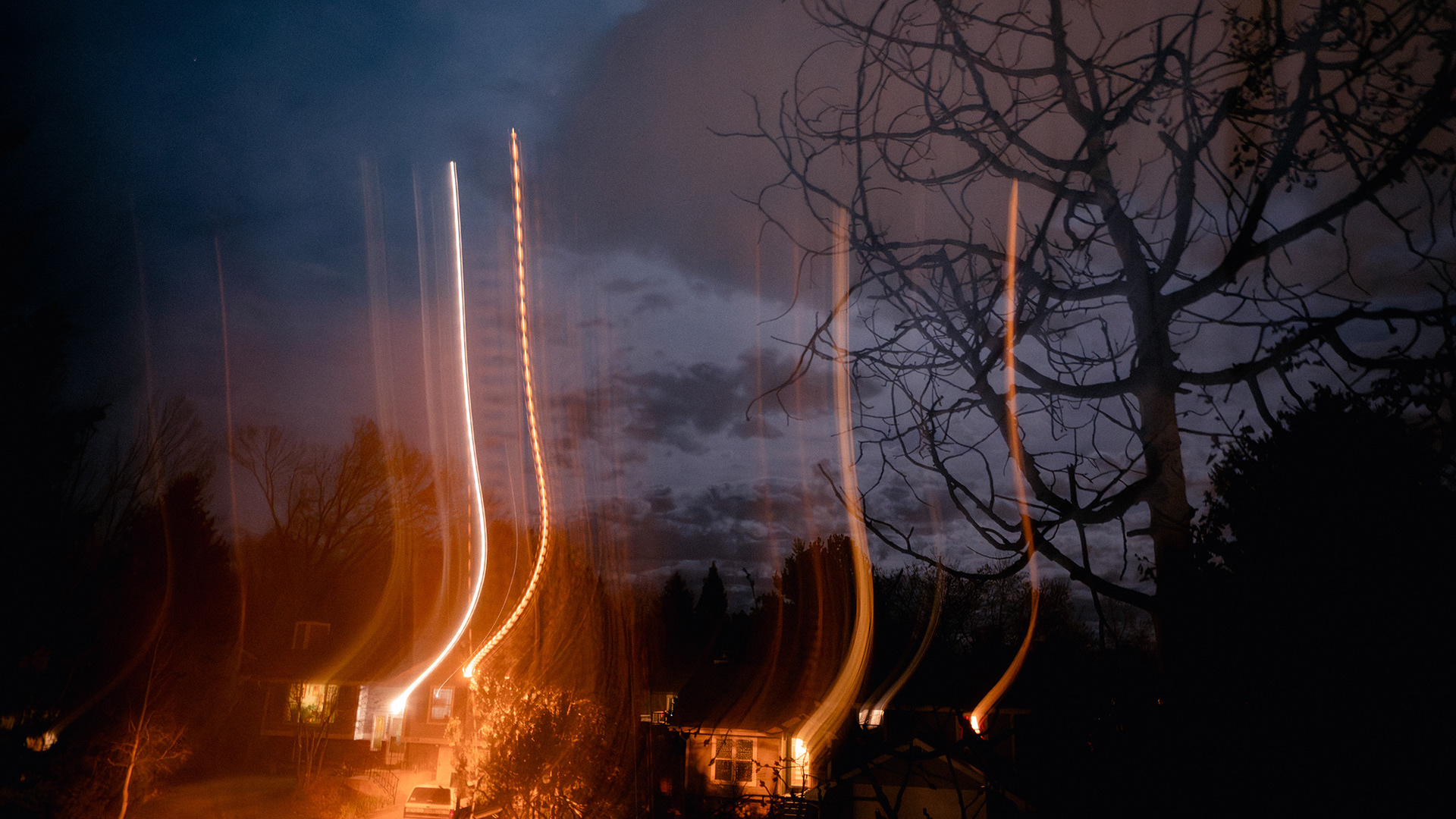
An Image Is Not a Photograph.
On AI, responsibility, and the human act of seeing
Several times a week, I engage in or read discussions about how Artificial Intelligence is challenging what photography means and how we value it. Many people feel uneasy as AI images start to look just like real photographs. Some see this as the end of meaningful photography, while others find it an exciting new creative opportunity.
I believe that now, more than ever, these discussions require recognizing the important difference between an image and a photograph. This distinction helps define why photography still matters to us.
In many of my conversations on this topic, I began to sense a real lack of distinction between an actual image and a computer-generated one, even when the latter is lifelike. Part of the issue, I believe, is that we don’t print photos anymore; instead, we view them on screens, moving us away from the tactile object of a photograph. Social platforms like Instagram train us to scroll rather than linger, devaluing photography and rewarding a stylized sameness over individual creativity. Very often, an image in the guise of a photograph is only about how it looks. But photography has always been more than appearance. It’s about meeting a place, a person, or a moment, and taking responsibility for what you choose to show and how you show it.
An image is not a photograph. As the late Henri Cartier-Bresson said, “It is an illusion that photos are made with the camera...they are made with the eye, heart, and head.”
This difference matters now more than ever. It brings us to an important question: what responsibility do we, as creators and viewers, have in photography?
The responsibility of a photograph.
A photograph starts in the real world. Light bounces off a subject and passes through a lens, captured on film or sensor. A person, standing in a certain place at a certain time, chooses where to point the lens and when to press the shutter. That choice matters. It shows attention, judgment, and responsibility.
To make a photograph is to say: this was here, and it mattered enough for me to see it.
In the most basic sense, a true, unedited photograph is our last documentation of truth, even if that truth is momentary.
The moment goes by, the subject changes, and the light will never be exactly the same again. A photograph captures that one-time event.
An AI-generated image is built from patterns and guesses, not from seeing a real moment. It can be changed over and over, and it doesn’t record something that actually happened.
This doesn’t make it less valuable as a way to express ideas visually. It just means it’s different and shouldn't be conflated with the value of photography.
As photographers, viewers, and creators, we have a responsibility to clearly name and recognize that difference.
Creativity and creation.
A lot of current discussion mixes up two ideas: creativity and creation.
A machine can create. It can put things together, combine, generate, and produce images that look new and complex.
But to me, creativity starts with experience.
It starts with spending time in a place and really feeling it. It’s about noticing small things, like how someone’s shoulders slump when they’re tired, or waiting for the light to move across a face and reveal something new. Creativity comes from memory, intuition, and a lifetime of careful observation. Sometimes it’s also luck: being in the right place at the right time, in an environment worthy of photographic capture.
AI, on the other hand, doesn’t have experience, presence, or memory. It’s not in a physical environment. It doesn’t wait or care about what it creates.
It can be guided by human intention, however, and in that guidance, something creative can emerge—but the originating act of creativity remains human.
A long history of collaboration.
The idea of the lone photographer hides a long history of teamwork. In the darkroom days, photographers worked with master printers who handled negatives and prints with great care. Choices like dodging and burning, picking paper, and timing chemicals were not just technical steps, but ways to translate the photographer’s vision. These were all artistic skills in themselves, separate from the photographer.
Ansel Adams spoke openly about the interpretive role of the print; the symphony versus the score. Richard Avedon worked closely with retouchers and editors. Magnum photographers relied on lab technicians who understood their visual language.
None of this diminished the photograph. It refined it. It helped the image more fully express the intention that began at the moment of exposure.
In this tradition, and in the way I utilize AI in my photography, using AI in post-production can be seen as working with a new kind of collaborator, a sort of experienced darkroom technician in a digital age.
In this way, AI is not a replacement for the photographer. It’s a tool that can help clarify, interpret, and improve the photograph that’s already been made.
Where AI fails.
AI has the most trouble with the part where photography starts.
AI doesn’t have presence or memory, and it can’t understand the emotional or ethical meaning of a moment. It can’t take responsibility for what it makes or for anything it witnesses.
When AI creates an image of a person who never existed in a place that never existed, it might look convincing. But it can’t serve as a document or as proof of a real moment.
This matters, especially in a world where images shape our understanding of reality.
Photography is about paying attention and bearing witness. AI by itself does not bear witness; it just puts things together.
Where AI shines.
At the same time, AI can be very helpful during the editing and interpretation stages of working with photographs, and has become an invaluable tool, though not a replacement in achieving a photographic vision.
In post-production, it can assist the photographer, regardless of the preferred post-production tool, by isolating and shaping light, refining color relationships, guiding tonal balance, and accelerating what can often be a trial-and-error process toward a final outcome. Moreover, it can help preserve that outcome across many printing processes, which may require additional image manipulation depending on the printer or paper type.
Used carefully, AI can help a photograph better match what the photographer felt in that moment.
In this way, AI works like a skilled darkroom assistant: it’s responsive, precise, and helps bring out the image.
But it still relies on the original act—the photograph taken in the real world.
A collaborative future.
So the real question isn’t whether AI has a place in photography—it already does. The question is how we use it and how we talk about what we create.
We can either blur the line between generated images and photographs or make it clear.
We can use AI as a tool that replaces our own sight, or as a partner that helps us better express what we’ve seen.
For me, the path forward is the latter.
I care about photographs—images that start with light, presence, and the human act of noticing. I also want to use every available tool, including AI, to carefully and precisely interpret those photographs.
But I don’t want to blur the source of an image.
The origin is the source of meaning.
The Conversation in Post-Production.
The collaboration I value most happens after the photograph is taken, in the editing room, as I work directly with the image.
My creative background includes many years of darkroom work as a prepress technician in the days of film. I worked for a large printer that printed not only high-dollar lithographs but also photo books for accomplished artists and photographers. So, sitting with a creator, digitally adjusting the color of scanned or photographed images, physically manipulating negatives, and suggesting ink movements on press gave me the skills to guide creators in fulfilling their vision. For me, using AI tools has made it possible to have a similar conversation about how to reach a creative vision in a more democratic way.
When I open a photograph in Lightroom or Photoshop, I already have a sense of what I want it to become. I might not have a detailed technical plan, but I have an intention—a feeling of weight, warmth, or quiet. It’s something I felt when I took the picture.
When I use AI in post production, I describe what I want in simple terms, like "I want the highlights to feel softer without flattening the overall contrast" or "I want to draw more attention to her face without the adjustment feeling obvious." Then AI suggests the exact steps in my software of choice—what tools to use, in what order, and how much to use. It handles the technical details, helping me achieve my vision.
This isn’t AI making creative choices. It’s AI helping me carry out the creative decision I’ve already made.
This difference is important. The tool never decides what the photograph should feel like. That choice is always mine—it started when I picked up the camera and continues through every step. AI just gives me a more direct way to get from my intention to the final result.
A photograph still starts and ends with a person seeing something. AI just helps me express what I saw more clearly.
To see, and to show.
In the end, photography is about noticing. It asks us to slow down, look closely, and find meaning in both ordinary and special moments.
AI can help us. It can expand what we’re able to do and help us bring our vision to life more completely.
But it can’t take our place.
The responsibility is ours—to see, to choose, and to show.
That’s what makes a photograph more than just an image.